
InnoElast® - Type 2C light gray
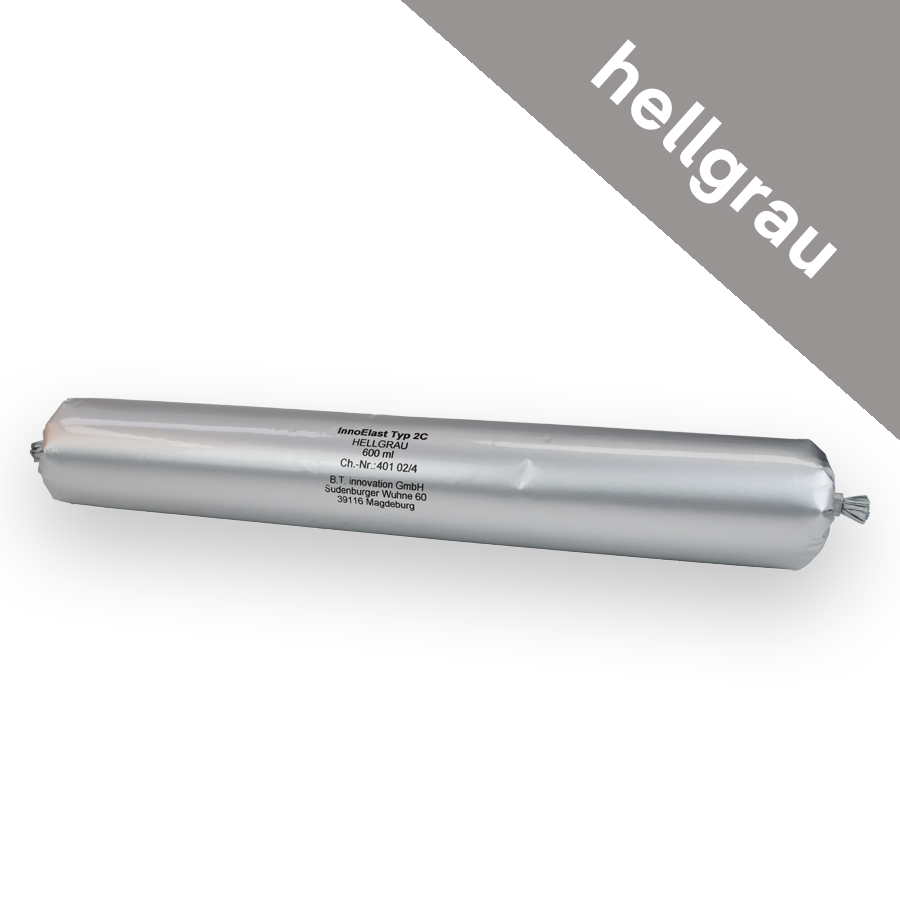
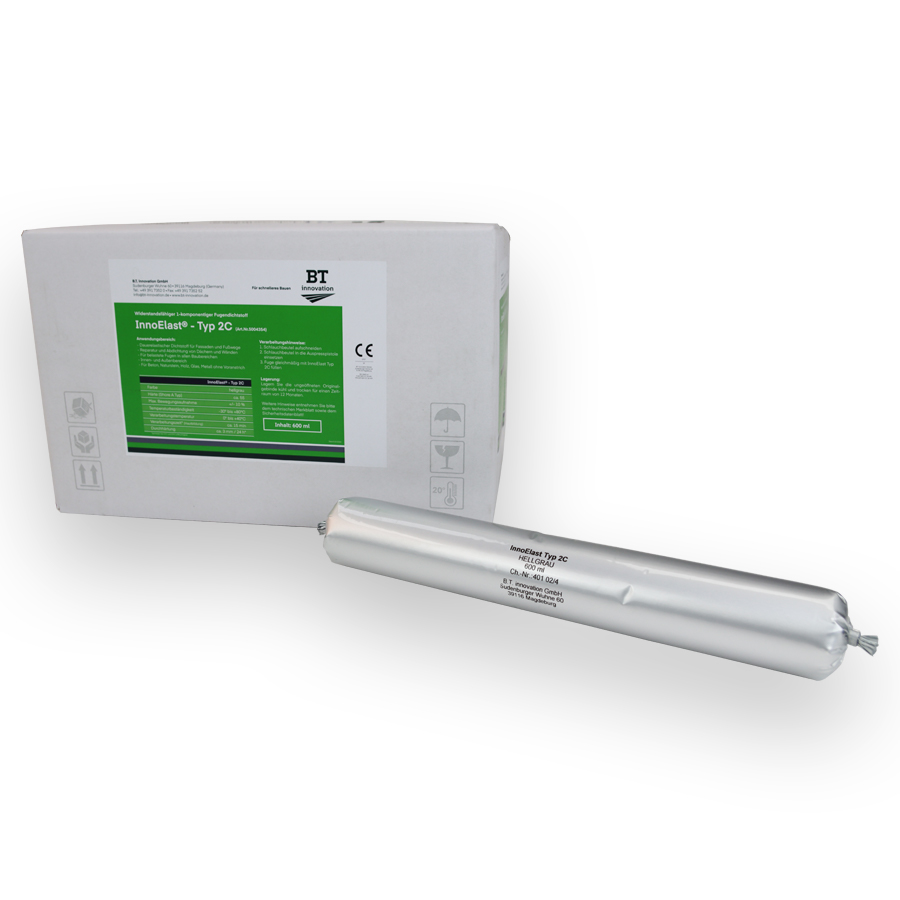
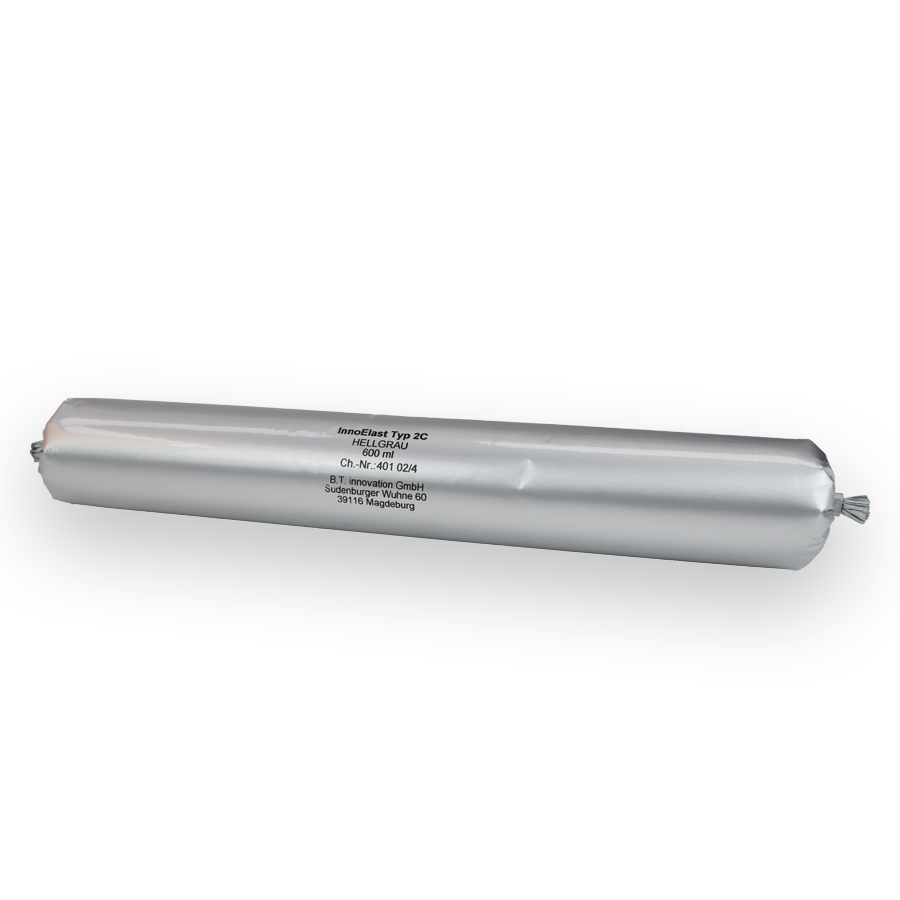
Product information "InnoElast® - Type 2C light gray"
InnoElast® - Type 2C is the solution for high quality sealing requirements in building and construction projects. Available in handy 600ml tubular sachets, our joint sealant offers outstanding performance and versatility. Available in black and light grey as standard, InnoElast® - Type 2C ensures that your sealing needs are satisfactorily met.
What makes InnoElast® - Type 2C special
What is the difference between InnoElast Type 2 and Type 2C?
In comparison to the standard InnoElast® Type 2(test certificate available), InnoElast® Type 2C has not yet received a test certificate as a joint seal against pressing water.Product features
- 1-component adhesive and sealant
- Good spraying capacity
- No primer required
- Can also be applied to damp substrates
- Virtually non-shrinking & permanently elastic
- Odorless, solvent- and isocyanate-free
- Geruchsneutral, lösungsmittel- und isocyanatfrei
- Weather and UV-resistant
- Compatible with paint
- Can be combined with other Elast products
Areas of application
- Adhesive and sealant for stressed joints in the entire construction sector (interior and exterior for concrete, natural stone, wood, glass and metal without primer).
- Permanently elastic sealant for facades and roof areas in accordance with DIN EN 15651 1
- Permanently elastic sealant according to DIN EN 15651 4 for walkways
- For repairing and sealing defects in roofs and walls
Surface preparation
Substrates must be firm and load-bearing and free from dust, grease, oils and other separating materials. The substrate must be damp, but not wet, with a visible film. Suitable substrates include concrete and other mineral building materials as well as plasterboard, natural stone, wood, steel, metals, PVC, ceramics, glass, etc. If in doubt, we recommend a preliminary test.
Processing
InnoElast® is applied directly from the tubular bag using a squeeze-out gun. Priming is not necessary if the substrate is suitable. For general joint sealing, ensure that the joint is sufficiently wide (≥5 mm) and sufficiently deep (≥ 10 mm and ≥ ½ width). A 3-edge adhesion to the joint base must be prevented by inserting a suitable joint filler cord or a strip of polyethylene. It is advisable to tape the edges of the joint with adhesive tape. The sealant must be applied to the joint without cavities or bubbles. A good bond with the joint edges must be achieved by pressing and smoothing. Pure liquid soaps (not diluted with water), e.g. washing-up liquid, are suitable as smoothing agents. The adhesive tape must be removed immediately after smoothing. The maximum thickness of sealant in one application should not exceed 5 cm. When used as an adhesive, InnoElast® is applied evenly to the bonding surface and spread with a notched trowel in a layer thickness of 1 to 2 mm. A cavity-free and bubble-free bond must be ensured by pressing on the entire surface. Large-area bonding with InnoElast® requires a moisture-permeable substrate. For impermeable substrates, we recommend the use of InnoElast® adhesive and sealant with artificial hardener. In cases of doubt regarding substrate preparation and processing, we recommend a preliminary test.
Post-treatment
InnoElast® must be protected from moisture while the skin is forming. For subsequent coating, we recommend preliminary tests due to the wide range of possible coating systems. InnoElast® Type 2C can be painted over in accordance with DIN 52452 Part 4.
Login
Dazu passt
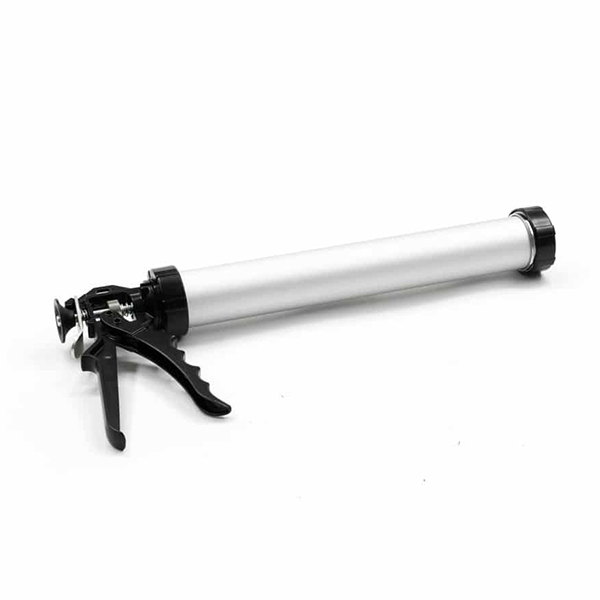
Hand squeeze gun The professional hand squeeze gun is made of a sturdy aluminum-steel housing. The good workmanship ensures a reliable and even flow of material. Application instructions using the example of InnoElast® The substrate must be grease-free, clean and load-bearing. The substrate may be damp, an adhesive primer is usually not required. Apply backfill material (prevents 3- flank adhesion, saves material). Joints should be sufficiently thick or wide >10 mm, maximum width is 5 cm. InnoElast® is supplied in 600 ml tubular bags and is filled evenly into the joint using a tubular bag gun. Pull off the sealant smoothly and allow to cure. The curing time depends on the temperature and humidity. Attention!!! If release agents are used, they must not be water-based.
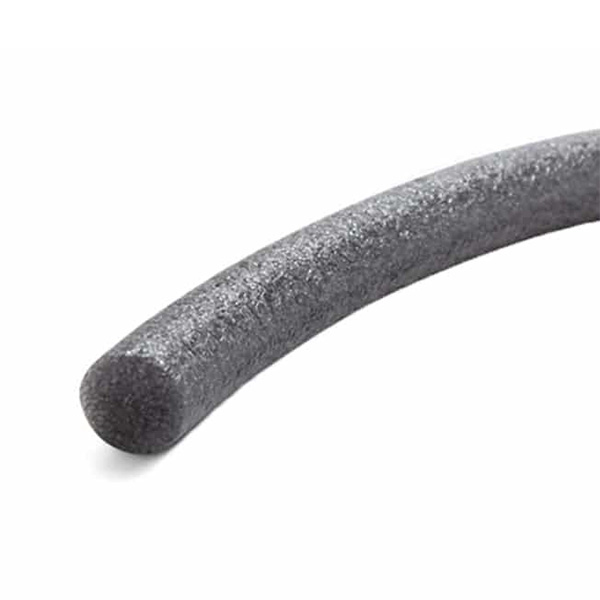
Important: From a size of 40mm diameter, 50x1m pieces are included per box! Please observe the notes on consumption: Joint width 5 mm 10 mm 15 mm 20 mm 30 mm 40 mm Joint depth 10 mm 10 mm 10 mm 10 mm 15 mm 20 mm Range of one hose bag 11,4 m 5,7 m 3,8 m 2,8 m 1,2 m 0,7 m Consumption of backfill cord (PE round cord) The backfill cord should be approx. 1,5 x as wide as the joint. Joint width 5-8 mm 8-12 mm 12-15 mm 15-18 mm 18-24 mm 24-30 mm 30-40 mm Diameter of PE cord 10 mm 15 mm 20 mm 25 mm 30 mm 40 mm 50 mm Product features and variants of the backfill cord Art.-Nr. Article description Article information 7009065 PE round cord 10 mm 100 m / Roll 7009066 PE round cord 15 mm 100 m / Roll 7009067 PE round cord 20 mm 50 m / Roll 7009069 PE round cord 30 mm 25 m / Roll 7009070 PE round cord 40 mm 50 m / Box (50x1m pieces) 7009071 PE round cord 50 mm 50 m / box (50x1m pieces)
Content: 100 Meter
Important: From a size of 40mm diameter, 50x1m pieces are included per box! Please observe the notes on consumption: Joint width 5 mm 10 mm 15 mm 20 mm 30 mm 40 mm Joint depth 10 mm 10 mm 10 mm 10 mm 15 mm 20 mm Range of one hose bag 11,4 m 5,7 m 3,8 m 2,8 m 1,2 m 0,7 m Consumption of backfill cord (PE round cord) The backfill cord should be approx. 1,5 x as wide as the joint. Joint width 5-8 mm 8-12 mm 12-15 mm 15-18 mm 18-24 mm 24-30 mm 30-40 mm Diameter of PE cord 10 mm 15 mm 20 mm 25 mm 30 mm 40 mm 50 mm Product features and variants of the backfill cord Art.-Nr. Article description Article information 7009065 PE round cord 10 mm 100 m / Roll 7009066 PE round cord 15 mm 100 m / Roll 7009067 PE round cord 20 mm 50 m / Roll 7009069 PE round cord 30 mm 25 m / Roll 7009070 PE round cord 40 mm 50 m / Box (50x1m pieces) 7009071 PE round cord 50 mm 50 m / box (50x1m pieces)
Content: 100 Meter
Important: From a size of 40mm diameter, 50x1m pieces are included per box! Please observe the notes on consumption: Joint width 5 mm 10 mm 15 mm 20 mm 30 mm 40 mm Joint depth 10 mm 10 mm 10 mm 10 mm 15 mm 20 mm Range of one hose bag 11,4 m 5,7 m 3,8 m 2,8 m 1,2 m 0,7 m Consumption of backfill cord (PE round cord) The backfill cord should be approx. 1,5 x as wide as the joint. Joint width 5-8 mm 8-12 mm 12-15 mm 15-18 mm 18-24 mm 24-30 mm 30-40 mm Diameter of PE cord 10 mm 15 mm 20 mm 25 mm 30 mm 40 mm 50 mm Product features and variants of the backfill cord Art.-Nr. Article description Article information 7009065 PE round cord 10 mm 100 m / Roll 7009066 PE round cord 15 mm 100 m / Roll 7009067 PE round cord 20 mm 50 m / Roll 7009069 PE round cord 30 mm 25 m / Roll 7009070 PE round cord 40 mm 50 m / Box (50x1m pieces) 7009071 PE round cord 50 mm 50 m / box (50x1m pieces)
Content: 50 Meter
Important: From a size of 40mm diameter, 50x1m pieces are included per box! Please observe the notes on consumption: Joint width 5 mm 10 mm 15 mm 20 mm 30 mm 40 mm Joint depth 10 mm 10 mm 10 mm 10 mm 15 mm 20 mm Range of one hose bag 11,4 m 5,7 m 3,8 m 2,8 m 1,2 m 0,7 m Consumption of backfill cord (PE round cord) The backfill cord should be approx. 1,5 x as wide as the joint Joint width 5-8 mm 8-12 mm 12-15 mm 15-18 mm 18-24 mm 24-30 mm 30-40 mm Diameter of PE cord 10 mm 15 mm 20 mm 25 mm 30 mm 40 mm 50 mm Product features and variants of the backfill cord Art.-Nr. Article description Article information 7009065 PE round cord 10 mm 100 m / Roll 7009066 PE round cord 15 mm 100 m / Roll 7009067 PE round cord 20 mm 50 m / Roll 7009069 PE round cord 30 mm 25 m / Roll 7009070 PE round cord 40 mm 50 m / Box (50x1m pieces) 7009071 PE round cord 50 mm 50 m / box (50x1m pieces)
Content: 200 Meter
Important: From a size of 40mm diameter, 50x1m pieces are included per box! Please observe the notes on consumption: Joint width 5 mm 10 mm 15 mm 20 mm 30 mm 40 mm Joint depth 10 mm 10 mm 10 mm 10 mm 15 mm 20 mm Range of one hose bag 11,4 m 5,7 m 3,8 m 2,8 m 1,2 m 0,7 m Consumption of backfill cord (PE round cord) The backfill cord should be approx. 1,5 x as wide as the joint. Joint width 5-8 mm 8-12 mm 12-15 mm 15-18 mm 18-24 mm 24-30 mm 30-40 mm Diameter of PE cord 10 mm 15 mm 20 mm 25 mm 30 mm 40 mm 50 mm Product features and variants of the backfill cord Art.-Nr. Article description Article information 7009065 PE round cord 10 mm 100 m / Roll 7009066 PE round cord 15 mm 100 m / Roll 7009067 PE round cord 20 mm 50 m / Roll 7009069 PE round cord 30 mm 25 m / Roll 7009070 PE round cord 40 mm 50 m / Box (50x1m pieces) 7009071 PE round cord 50 mm 50 m / box (50x1m pieces)
Content: 25 Meter

Important: From a size of 40mm diameter, 50x1m pieces are included per box! Please observe the notes on consumption: Joint width 5 mm 10 mm 15 mm 20 mm 30 mm 40 mm Joint depth 10 mm 10 mm 10 mm 10 mm 15 mm 20 mm Range of one hose bag 11,4 m 5,7 m 3,8 m 2,8 m 1,2 m 0,7 m Consumption of backfill cord (PE round cord) The backfill cord should be approx. 1,5 x as wide as the joint. Joint width 5-8 mm 8-12 mm 12-15 mm 15-18 mm 18-24 mm 24-30 mm 30-40 mm Diameter of PE cord 10 mm 15 mm 20 mm 25 mm 30 mm 40 mm 50 mm Product features and variants of the backfill cord Art.-Nr. Article description Article information 7009065 PE round cord 10 mm 100 m / Roll 7009066 PE round cord 15 mm 100 m / Roll 7009067 PE round cord 20 mm 50 m / Roll 7009069 PE round cord 30 mm 25 m / Roll 7009070 PE round cord 40 mm 50 m / Box (50x1m pieces) 7009071 PE round cord 50 mm 50 m / box (50x1m pieces)
Important: From a size of 40mm diameter, 50x1m pieces are included per box! Please observe the notes on consumption: Joint width 5 mm 10 mm 15 mm 20 mm 30 mm 40 mm Joint depth 10 mm 10 mm 10 mm 10 mm 15 mm 20 mm Range of one hose bag 11,4 m 5,7 m 3,8 m 2,8 m 1,2 m 0,7 m Consumption of backfill cord (PE round cord) The backfill cord should be approx. 1,5 x as wide as the joint. Joint width 5-8 mm 8-12 mm 12-15 mm 15-18 mm 18-24 mm 24-30 mm 30-40 mm Diameter of PE cord 10 mm 15 mm 20 mm 25 mm 30 mm 40 mm 50 mm Product features and variants of the backfill cord Art.-Nr. Article description Article information 7009065 PE round cord 10 mm 100 m / Roll 7009066 PE round cord 15 mm 100 m / Roll 7009067 PE round cord 20 mm 50 m / Roll 7009069 PE round cord 30 mm 25 m / Roll 7009070 PE round cord 40 mm 50 m / Box (50x1m pieces) 7009071 PE round cord 50 mm 50 m / box (50x1m pieces)